Physical Address
304 North Cardinal St.
Dorchester Center, MA 02124
Physical Address
304 North Cardinal St.
Dorchester Center, MA 02124

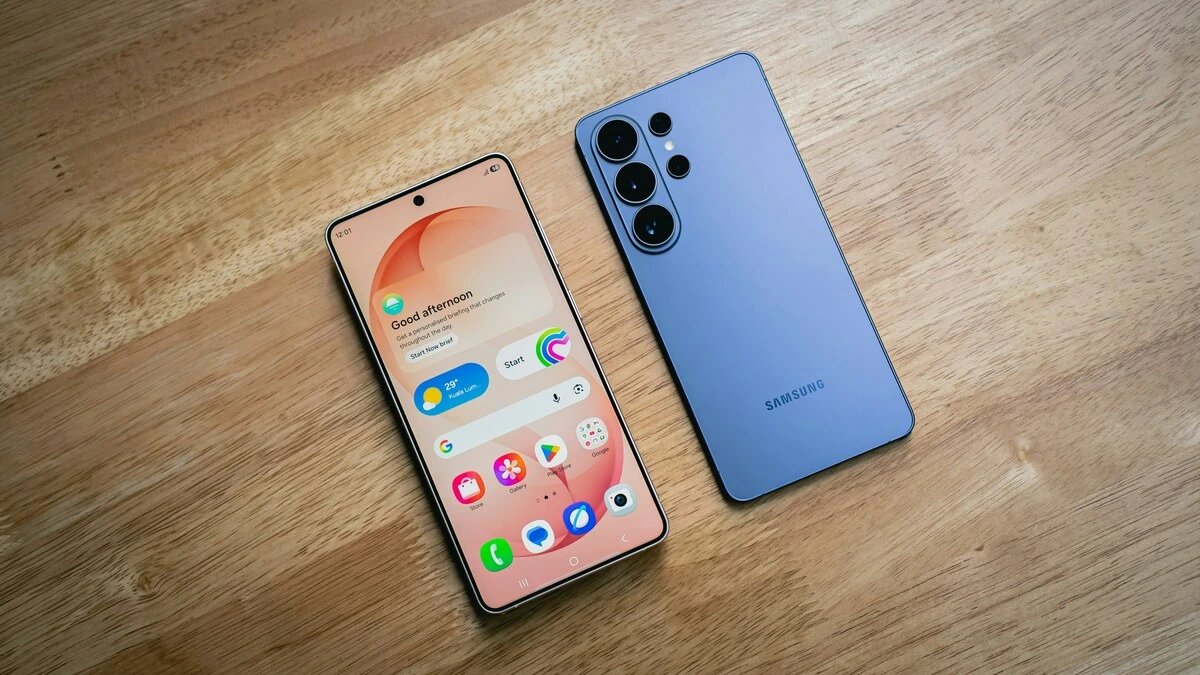
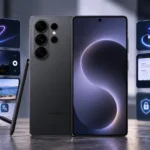
The Galaxy S26 Ultra combines Samsung’s biggest display, most capable camera system, powerful performance and new AI features. Here’s what makes it stand out, and who should actually buy it.
The Galaxy S Ultra series is less about being a regular smartphone and more about showing off everything Samsung can fit into one device. The S26 Ultra keeps that going with a 6.9-inch QHD+ screen, a 200MP main camera, dual telephoto lenses, a 5,000mAh battery, the S Pen, Samsung’s latest Galaxy AI, and a new Privacy Display that makes it tough for people next to you to see your screen.
On paper, this is one of the most complete Android phones of 2026. But after two weeks of daily use and seeing the benchmark results, the real question isn’t whether it’s powerful. The real question is whether you actually need an Ultra, and this year’s model doesn’t quite live up to the hype.
SamScopes Rating: 4 / 5
Here’s how we tested it: For two weeks, we used the S26 Ultra as our everyday device, carrying out real-world activities such as photography, gaming, taking notes with the S Pen and using navigation, and at the same time checked the standardised benchmark figures (Geekbench 6, 3DMark, AnTuTu, PCMark) provided by independent laboratories. For more details about our method, see our review methodology.
Price and Configurations
The S26 Ultra starts at $1,299 / £1,280 / €1,450 for 256GB. You can also get 512GB or 1TB versions. The 256GB and 512GB models have 12GB of RAM, while the 1TB version has 16GB. This is a premium phone with a premium price, but Samsung often runs trade-in and pre-order deals that lower the real cost. Check our Galaxy S deals tracker for the latest offers.
For more on its position relative to the S26 and S26+, see our full comparison of the S26 versus the S26+ and the Ultra.
Quick Overview
| Display | 6.9-inch Dynamic AMOLED 2X, QHD+, 1–120Hz |
| Chipset | Snapdragon 8 Elite Gen 5 for Galaxy |
| RAM / Storage | 12GB or 16GB / 256GB, 512GB, 1TB |
| Main camera | 200MP f/1.4 |
| Ultrawide | 50MP |
| Telephoto | 50MP (5x) + 10MP (3x) |
| Front | 12MP |
| Battery | 5,000mAh |
| Charging | 60W wired, wireless + PowerShare |
| Software | Android 16, One UI 8 (One UI 9 eligible) |
| Build | 163.6 × 78.1 × 7.9mm, 214g, aluminium frame |
| Extras | S Pen, Privacy Display, up to 100x zoom |
Design: Familiar, Refined, and Back to Aluminium
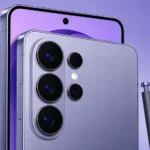
Samsung did not reinvent the Ultra, but it did refine the big-screen formula. The phone measures 163.6 × 78.1 × 7.9mm and weighs 214g, so it is still a large device, but a bit slimmer than before. You can get it in Cobalt Violet, Sky Blue, Black, White, or Silver Shadow. The back now has a glass camera island that blends into the body instead of separate lens rings.
It’s worth mentioning, although Samsung doesn’t promote it, that the frame has gone back this year from titanium (in the S24 and S25 Ultra) to aluminium. However, it is lighter; some customers will see this as a step down in terms of materials because the phone is priced at this level.
The S Pen is still included as a built-in feature, and this is the only characteristic that distinguishes the Ultra from all other mainstream flagship phones.
The Privacy Display: The Standout New Feature
The most genuinely new feature is the Privacy Display, which reduces the angles from which the screen can be viewed whenever you want it to, so that people next to you cannot easily read it. It can be used on the entire screen or only on certain content such as notifications, PINs, passwords and the Secure Folder.
Anyone who checks email on a plane, types a password in a café, or looks at sensitive work on a train will find this feature really useful. It eliminates the need for a stick-on privacy screen protector by building the privacy feature directly into the panel, and it’s a rare example of a feature that changes how the phone is used rather than just how it performs. In reality, it’s the feature most likely to make an S25 Ultra owner notice.
Display: Still a Class Leader
The 6.9-inch Dynamic AMOLED 2X display — QHD+ with an adaptive 1-to-120Hz rate — is precisely what you’d anticipate from Samsung at the top end: it’s sharp, bright, and smooth. The adaptive refresh rate increases to 120Hz when scrolling and decreases for static content to conserve power.
For video, photo editing, reading, and S Pen use, the screen’s size and quality still make it one of the best reasons to choose the Ultra over the smaller S26 models. The display test features actual measurements of brightness and colour.
Performance: Fast, But Read the Fine Print
The Ultra features the Snapdragon 8 Elite Gen 5 used in the Galaxy range, a slightly overclocked version that comes with up to 16GB of RAM. According to independent tests, it scores about 10,700 to 11,400 in the Geekbench 6 multi-core test and approximately 3.9 million in the AnTuTu test – performance that is well within the top-end category and sufficient for everyday use, so you will never notice any lag.
The detailed information that the specification sheet omits is that independent laboratories have found only a minor and insignificant improvement in prolonged CPU and GPU stress testing compared to the previous year’s model, and in fact the thermal throttling is worse. GSMArena recorded the CPU dropping below 50% of its peak level when under prolonged load.
Although Samsung has redesigned the vapour chamber to help with charging heat, the Ultra throttles more than is desirable during long gaming sessions at this price. The effect is not noticeable in typical everyday use; however, for continuous gaming, it is a real drawback. Refer to our performance test for the full picture when under sustained load.
Camera: A Brilliant System Whose Lead Is Narrowing
The camera remains one of the best reasons to choose the Ultra, featuring a 200MP main sensor with an f/1.4 aperture, a 50MP ultrawide, a 50MP 5x telephoto, and a 10MP 3x telephoto.
The f/1.4 aperture on the wide lens captures considerably more light, and Samsung says the telephoto lens (f/2.9) is 37% brighter than last year, with improved Nightography noise reduction. In practice, the phone’s low-light performance and zoom capabilities are very good.
In truth, independent reviewers are now pointing out that the Ultra’s advantage in camera performance compared to its competitors is shrinking. The iPhone 17 Pro Max and the Pixel 10 Pro XL have narrowed the gap considerably and, in certain blind tests, now match or even beat Samsung in particular situations.
The Ultra remains one of the two or three best camera phones available, but it is no longer the clear standout that it previously was. For more information, see our camera test and the guide on the best Galaxy S phone for camera performance.
Zoom and video
Zoom is still a major strength, offering 3x and 5x optical zoom, 2x and 10x optical zoom quality, and a digital zoom up to 100x. Video has also improved, with 8K at 30fps and 4K at 120fps in the available modes, better stabilisation including a horizontal-lock feature, and support for the professional APV codec.
For creators who use a phone as part of an actual production workflow, that provides them with a valuable set of tools.
Battery and Charging
Samsung states that its 5,000mAh battery provides up to 31 hours of video playback; in standardised PCMark tests, it scores about 14.5 hours, which is good but not among the best in its class—sufficient to cover a full day comfortably for the average user. That said, heavy users will still need to use a charger by the end of the day.
The device now supports 60W wired charging, with Samsung saying it can reach around 75% in about 30 minutes, along with wireless charging and Wireless PowerShare. It’s a welcome improvement, but some Chinese competitors now offer 80 to 120W, so even with this upgrade, Samsung’s charging performance is typical rather than at the forefront. Refer to our charging test for the actual charging times.
Galaxy AI, One UI and the S Pen
The device runs on Android 16 together with One UI 8 and is expected to receive an update to One UI 9. Galaxy AI is integrated everywhere – it includes Photo Assist for making photo edits using natural language, as well as AI features in search, productivity, and personalisation rather than confining them to a single app.
Whether it proves worthwhile is up to you: if your main activities are calling, messaging, and streaming, most features will go unused; but for creators, professionals, and heavy multitaskers, they add value.
The S Pen remains a true standout feature. For note-taking, annotations, and precise editing and navigation, it is superior on a screen this size. Anyone who actually uses a stylus will agree that there’s nothing else in the mainstream flagship range that comes close.
How It Compares
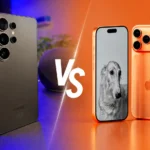
At this price, you’re comparing the iPhone 17 Pro Max (£1,199) with the Pixel 10 Pro XL (about £1,199). In short, the S26 Ultra outperforms the iPhone in multi-core CPU throughput but underperforms Apple’s A19 Pro in single-core performance and, more importantly, in sustained performance and thermal stability.
When it comes to the Pixel, Samsung comes out ahead in zoom capability, the display, and the S Pen; Google holds its own in computational photography and value.
Testers who have used all three agree that the S26 Ultra is the best Android phone of 2026 and probably the best all-round camera phone, coming just behind the iPhone 17 Pro Max in overall refinement. For those looking for the most versatile hardware and who are based in the Android market, this is the device to choose, although the competition is now very tight, not a straightforward win.
What We Like
What Could Be Better
Who Should Buy It?
The S26 Ultra is for people who want all the features in a single device, such as photographers, content creators, mobile gamers, business professionals, heavy multitaskers, S Pen users, and anyone who wants the largest Galaxy screen paired with Samsung’s most advanced camera and AI. If someone is looking for a smaller, less expensive, or lighter phone, the S26 or S26+ will be better for most people.
For those who already have an S24 Ultra or an S25 Ultra, the upgraded model has a weaker case. The Privacy Display and the charging bump are the strongest reasons to switch; the improvements in camera and performance are more modest than the specifications suggest. Our comparison of the S26 Ultra and the S25 Ultra explains whether the upgrade is worthwhile.
Verdict
The Galaxy S26 Ultra lives up to its name. It has a large, excellent display; a versatile 200MP camera system; the S Pen; a new Privacy Display; the best battery in its class; and faster charging, making it an outstanding all-rounder and the best Android phone of 2026.
It receives a 4 out of 5 rather than a perfect mark for good reasons: sustained-performance regression, a less decisive camera advantage, and charging that lags behind competitors. Yet this doesn’t mean it isn’t a straightforward recommendation for power users, content creators, and anyone who wants the most complete Galaxy experience.
For everybody else, the regular S26 or S26+ offers most of what is important at a lower price, and the real issue wasn’t whether the Ultra is good, but whether you actually need a phone with such specifications.
SamScopes rating: 4 out of 5; specifications and features vary by market and software version, and battery performance will vary depending on usage, network conditions, and settings.
For more, see our Galaxy S series complete guide, best Galaxy S phone to buy, and the S26 vs iPhone 17 Pro Max and S26 vs Pixel comparisons.