Physical Address
304 North Cardinal St.
Dorchester Center, MA 02124
Physical Address
304 North Cardinal St.
Dorchester Center, MA 02124

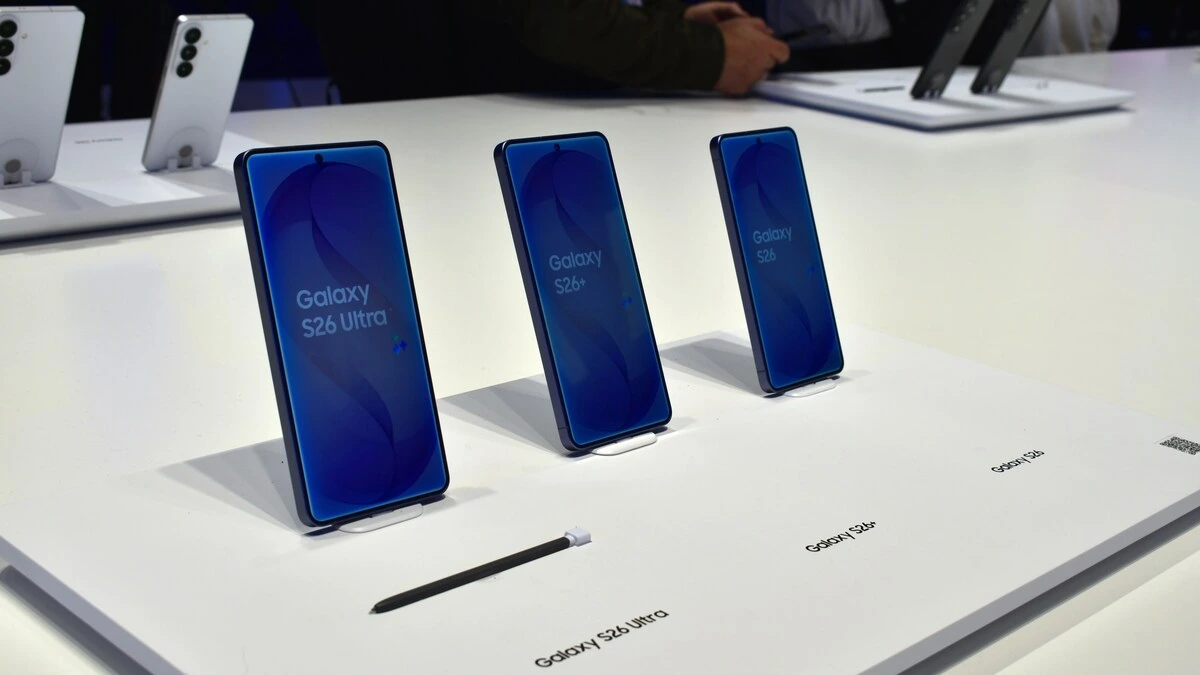
Everything you need to know about Samsung Galaxy S phones, from flagship features and camera technology to performance, software, and which Galaxy S model is right for you.
The Galaxy S series is Samsung’s flagship smartphone family. This is where Samsung introduces its latest display technology, camera systems, processors, One UI software, and Galaxy AI features. If you want Samsung’s best hardware, you will find it in this lineup.
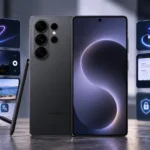
The current generation is the Galaxy S26 series, which includes the Galaxy S26, Galaxy S26+, and Galaxy S26 Ultra. All three share the same flagship foundation, but each is designed for a different type of user. The differences between them are more significant than the similar design might suggest.
This guide brings together everything SamScopes covers about the Galaxy S line. Here, you will find an explanation of the series, a breakdown of the current models with actual specifications and prices, and links to our detailed reviews, tests, comparisons, and buying guides. Use this information to decide what matters most before you buy.
The Galaxy S series is Samsung’s premium flagship line. Unlike the mid-range Galaxy A series, which delivers core Samsung features at lower prices, Galaxy S phones showcase the company’s latest and most capable mobile technology: high-refresh AMOLED displays, advanced multi-camera systems, flagship-class chipsets, premium builds, and Samsung’s newest software.
The series is now the anchor of the wider Galaxy ecosystem. A Galaxy S phone is built to work with the Galaxy Watch, Galaxy Buds, Galaxy Ring, Galaxy Tab, and SmartThings devices. It is not just a standalone product; it’s also the control centre for your other Samsung devices.
If you’re still deciding between Samsung’s ranges, our Galaxy S vs Galaxy A vs Galaxy Z breakdown explains which family fits which buyer.
Samsung announced the Galaxy S26 series at Galaxy Unpacked on 25 February 2026. The phones became available in stores on 11 March 2026. Samsung calls this its third generation of AI phones. The lineup includes three models:
Here are a few points that stand out, which spec sheets often overlook:
The Galaxy S26 is the smallest and lightest phone in the range. It has a 6.3-inch FHD+ display, weighs 167g, and comes with a 4,300mAh battery. This is the only model to get a battery increase this generation, up from 4,000mAh on the S25. The camera setup includes a 50MP main, 12MP ultra-wide, and 10MP telephoto lens.
Choose this model if you want flagship performance and a capable camera in a smaller phone. Independent endurance tests show it has the shortest battery life of the three, which is the trade-off for its compact size.
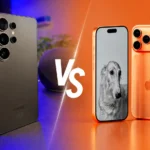
Read our full Galaxy S26 review, or see how it stacks up in Galaxy S26 vs iPhone 17 and Galaxy S26 vs Pixel.
The Galaxy S26+ offers the same features in a larger body. It has a 6.7-inch QHD+ display, a 4,900mAh battery, and weighs 190g. The camera system matches the base model.
The main reason to choose the S26+ over the base model is the larger screen and longer battery life. Independent tests show it lasts longer than the S26. If you want a big screen but do not need the Ultra’s camera hardware or S Pen, the S26+ is the best value of the three. of the three.
See the Galaxy S26+ review and our best Galaxy S phone for battery breakdown.
The Galaxy S26 Ultra is the top model in Samsung’s smartphone lineup. It features a 6.9-inch QHD+ LTPO display with a peak brightness of about 3,000 nits, a 5,000mAh battery, and the longest battery life of the three according to independent tests.
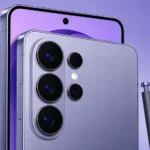
The camera system sets the Ultra apart. It has a 200MP main sensor with a wide f/1.4 aperture, which is Samsung’s brightest so far. It also has a 50MP ultra-wide and two telephoto cameras with 3x and 5x zoom, plus AI-powered zoom up to 100x.
The Ultra is the only S26 model with a built-in S Pen and the new Privacy Display. This feature narrows viewing angles so others cannot easily see your screen, and you can apply it to the whole display or just certain apps and notifications.
The Ultra is also the only model with 60W wired charging and a 1TB storage and 16GB RAM option. One change this generation is that Samsung switched the Ultra’s frame from titanium to aluminium.
Read the in-depth Galaxy S26 Ultra review, the Ultra camera test, and Galaxy S26 Ultra vs S25 Ultra if you’re weighing an upgrade.
In the US and China, all three phones use the Snapdragon 8 Elite Gen 5. Most other regions get Samsung’s Exynos 2600. Independent benchmarks show the Exynos 2600 matches the Snapdragon in multi-core scores but is a bit slower in single-core tests.
Real-world performance is similar, but not the same, depending on your region. For daily use, you can expect fast app launches, smooth multitasking, and enough power for on-device AI. See our Galaxy S performance and gaming tests for detailed results.
The S26 family uses Dynamic AMOLED 2X panels with adaptive refresh rates from 1 to 120Hz. The S26 has an FHD+ display, while the S26+ and Ultra offer QHD+. Peak brightness is 2,600 nits on the S26 and S26+, and about 3,000 nits on the Ultra. These numbers match the S25 generation, while some competitors now offer higher brightness. See our display test for more details.
The S26 and S26+ both have a 50MP main, 12MP ultra-wide, and 10MP telephoto camera system with 3x optical zoom and 8K video at 30fps—the Ultra upgrades to a 200MP main camera, a 50MP ultra-wide, and two telephoto lenses. Samsung’s ProVisual Engine manages image processing, with a special focus on low-light performance this year due to wider apertures. Our camera test explains how each model performs in real use.
All three models come with Android 16 and One UI 8.5. Samsung promises seven OS upgrades and seven years of security patches, which is one of the longest support policies in the industry. This means the S26 will be supported until 2033.
Galaxy AI is the main software highlight, with the S26 generation focusing on AI that works in the background to simplify daily tasks. See our Galaxy AI features and best settings guides for more details.
Samsung’s portfolio splits into three families:
For a full breakdown, see our complete foldables guide and Galaxy A series guide.
Choose the Galaxy S26 if you want a compact flagship. The 6.3-inch screen and 167g weight make it the easiest to carry, and you still get flagship performance and a solid triple camera.
Choose the Galaxy S26+ if you want a bigger screen and battery without paying for the Ultra. It shares the S26’s cameras but adds meaningful endurance — the value middle ground.
Choose the Galaxy S26 Ultra if you want the most capable phone Samsung offers. The 200MP camera, dual telephoto lenses, 100x zoom, S Pen, Privacy Display, 60W charging, and top battery life make it worth the upgrade if you need these features.
For a full walkthrough with current pricing, see our best Galaxy S phone to buy, best S phone for camera and best S phone for battery guides.
Samsung’s flagship smartphone family, designed to showcase its latest hardware, cameras, displays, software and AI. It sits above the value-focused Galaxy A range and alongside the foldable Galaxy Z range.
The Galaxy S26 series — Galaxy S26, S26+ and S26 Ultra — was announced on 25 February 2026 and is on sale from 11 March 2026.
Size and battery. The S26 has a 6.3-inch display and a 4,300mAh battery; the S26+ has a 6.7-inch display and a 4,900mAh battery. The cameras and RAM are the same.
The Ultra has a bigger 6.9-inch display, a 200MP dual-telephoto camera system, 60W charging, a 1TB/16GB option, the S Pen and the Privacy Display. The S26+ keeps the standard 50MP camera and 45W charging.
The S26 Ultra has a 200MP f/1.4 main sensor, 50MP ultra-wide and two telephoto cameras. The S26 and S26+ share a simpler but still capable 50MP system.
Yes — it’s the only model in the range with a built-in S Pen. The S26 and S26+ don’t include one.
Seven major OS upgrades and seven years of security patches, meaning support into 2033.
No. None of the S26 models supports microSD. Storage starts at 256GB.
No. The box includes the phone, a USB-C cable and an ejection pin. You’ll need a compatible adapter to hit the rated charging speeds.
The Galaxy S series has evolved from Samsung’s premium phone line into the centre of the Galaxy ecosystem. This generation, the choice is simple. The S26 and S26+ are the same phone in different sizes, while the Ultra is the only model with major hardware changes. Choose based on size, camera needs, and how much flagship capability you will actually use.
SamScopes covers every Galaxy S model, feature, and generation in detail. Start with our Galaxy S26 Ultra review, our guide to the best Galaxy S phone to buy, or our Galaxy S vs iPhone and Galaxy S vs Pixel comparisons to see how Samsung’s flagship compares to the competition.