Physical Address
304 North Cardinal St.
Dorchester Center, MA 02124
Physical Address
304 North Cardinal St.
Dorchester Center, MA 02124

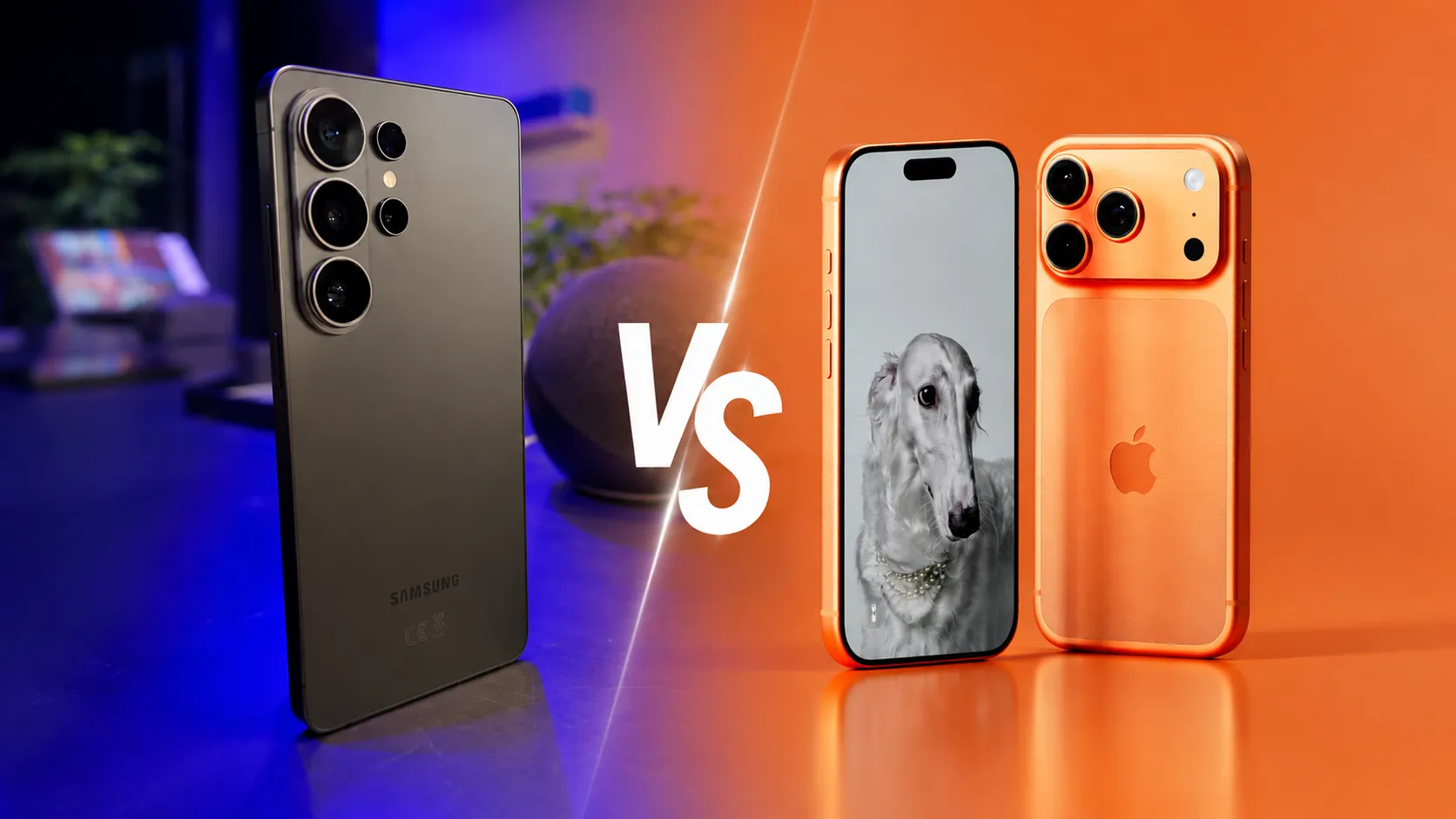
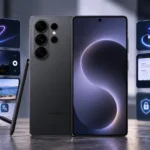
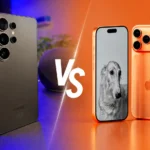
Samsung’s Galaxy S26 Ultra and Apple’s iPhone 17 Pro Max are two of the biggest flagship phones of 2026. We compare their displays, cameras, performance, battery life, software and features to see which one is right for you.
I Tested Both for Two Weeks — Here’s the Honest Answer
For two weeks, I carried both phones, one in each pocket. I swapped SIM cards, shot the same scenes, and ran the same benchmarks. This is not a spec-sheet comparison. Samsung and Apple both list impressive numbers, but those do not tell you which phone you will actually like using.
Let me save you some time. If you are not tied to either brand and starting fresh, I recommend the Galaxy S26 Ultra. Its camera flexibility, lighter build, Privacy Display, and S Pen all make a real difference in daily use. But you need to be willing to put in some effort. By the end of this, you will know if that is you.
Here’s what I found.
If you’d like me to explain the reasons for each of those points, then please continue reading. For where the Ultra sits within Samsung’s own range, refer to my Galaxy S26 Ultra review and the full Galaxy S lineup guide.
| Price (256GB) | $1,299 | $1,199 |
| Display | 6.9″ QHD+ AMOLED 2X | 6.9″ Super Retina XDR OLED |
| Refresh | 1–120Hz adaptive | 1–120Hz ProMotion |
| Chip | Snapdragon 8 Elite Gen 5 | Apple A19 Pro |
| Geekbench 6 multi | ~11,400 | ~9,900 |
| Main camera | 200MP f/1.4 | 48MP |
| Ultrawide | 50MP | 48MP |
| Telephoto | 50MP 5x + 10MP 3x | 48MP 4x |
| Max zoom | 100x digital | 40x digital |
| Battery | 5,000mAh | 4,832mAh |
| Tom’s Guide battery test | 16h 40m | 17h 54m |
| Wired charging | 60W | ~40W |
| Stylus | Built-in S Pen | None |
| Storage | up to 1TB | up to 2TB |
| Weight | 214g | 233g |
| OS | Android 16 / One UI | iOS 26 |
Two figures in that table matter more than all the others, and they contradict one another: Samsung comes out ahead in the benchmark test, while Apple wins the real-world battery test. Keep that in mind – it’s the entire story of these two phones.
Both are big, glass-and-metal phones that cost more than many laptops. After two weeks, what stood out was not how they look, but how they feel. The Ultra is 214g, the iPhone is 233g. Nineteen grams sounds small, but after carrying both, it matters. I picked the Samsung.
One note on materials: Samsung switched back to an aluminium frame this year after two years of titanium. That helps make the Ultra lighter. If you wanted titanium, it is not here.
The iPhone cannot store or use an S Pen. For some people, that alone makes the choice easy.
My pick: Galaxy S26 Ultra — lighter, and the S Pen is a genuine hardware advantage.
I thought I would find small differences here, but I did not. Both have 6.9-inch, 120Hz screens that look great. Apple’s is a Super Retina XDR OLED at 2868×1320. Samsung’s is a QHD+ Dynamic AMOLED 2X. Put them side by side and you will be happy with either.
What stood out to me was Samsung’s Privacy Display. When you turn it on, the screen reduces the angles from which it can be viewed so that the person sitting next to you on the train or the plane can’t read what’s on it. You can use it on all content or limit it to notifications, PINs, and passwords.
I did not expect to care about this feature, but after using it on three flights and in a café, I saw how useful it is. It changes how you use your phone, not just how it looks. The iPhone does not have anything like it.
My pick: Galaxy S26 Ultra — the panels are level; the Privacy Display is the tiebreaker.
This is where the spec sheet can mislead you. Here is what I actually measured.
For peak performance, Samsung wins. The S26 Ultra scores about 11,400 on Geekbench 6 multi-core, the iPhone about 9,900. That is a 15 to 20 percent lead. Open an app or a game, and the Galaxy is faster.
But after twenty minutes of heavy use, things change. In long gaming or stress tests, the iPhone 17 Pro Max keeps its speed more consistently. It has better 3DMark stability, runs cooler, and uses less battery per hour. The Ultra hits higher peaks but slows down more as it heats up. For gaming stability, the iPhone wins.
So which is better? It depends on your use. If you want the fastest phone for quick tasks and do not game for hours, pick Samsung. If you play long gaming sessions, the iPhone’s steady speed and cooler running are better. I cover the Ultra’s throttling in more detail in my performance test.
My pick: a genuine split — Samsung for peak speed, Apple for sustained load.
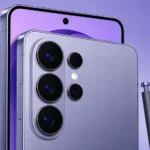
This is what most people care about, and it is closer than the specs suggest. The Ultra has a 200MP main, 50MP ultrawide, and two telephotos (50MP 5x, 10MP 3x). The iPhone has three 48MP sensors with a 4x telephoto. On paper, Samsung looks far ahead. In real use, it is not that simple.
Shooting the same scenes, I saw a pattern. The iPhone gives sharper, more neutral images. The Galaxy gives brighter shots with faster autofocus. Samsung’s photos are punchy and bright, which most people like. Apple stays closer to real life, which video creators and purists prefer. Neither is wrong. It is a matter of taste.
The Ultra stands out for reach and flexibility. Two telephoto lenses and a big main sensor give you framing options the iPhone cannot match. Samsung’s zoom goes to 100x, Apple’s to 40x. For travel, concerts, or wildlife, the Galaxy is more versatile. My camera test has full-res crops if you want to see the details.
My pick: Galaxy S26 Ultra for stills and zoom versatility; a genuine toss-up on processing taste.
If you shoot serious video, Apple is ahead here. The iPhone 17 Pro Max supports ProRes, ProRes RAW, and Apple Log 2, and fits into a pro editing workflow better than any Android phone. The Ultra can do 8K at 30fps, has strong stabilisation, better low-light, and supports the APV codec. But Apple’s video system is a real advantage for creators.
If your phone doubles as a video camera for work, the iPhone is the safer pick.
My pick: iPhone 17 Pro Max.
Most reviews give this category to Samsung because of its bigger battery and faster charging. That is only half right. The important part for daily use is different.
On actual endurance, the iPhone wins. In Tom’s Guide’s controlled web-browsing test, the iPhone 17 Pro Max ran 17h 54m to the Ultra’s 16h 40m — over an hour of real-world advantage. Apple’s silicon efficiency and software optimisation squeeze more hours out of a smaller cell. Credit to Samsung, though: this is the most efficient Ultra yet, and it genuinely outlasts last year’s S25 Ultra thanks to the more efficient chip and better cooling. It’s just still behind the iPhone.
Samsung wins on charging speed: 60W versus about 40W. The Ultra charges faster. If you care about battery life, pick Apple. If you want to top up quickly before leaving, pick Samsung.
My pick: iPhone for battery life, Samsung for charging speed. Samsung does not win this category overall.
After two weeks, I can say most of the categories above are close. This one is what matters.
One UI on the Ultra gives you the flexibility Android is known for — deep home-screen customisation, real multitasking and split-screen, proper file management, default-app freedom, DeX for a desktop-style workflow, and of course the S Pen. If you use Windows, Google services or other Android devices, it fits your life with far less friction.
iOS on the iPhone gives you Apple’s famous integration. If you already own a MacBook, an Apple Watch and AirPods, the iPhone drops into that world seamlessly — AirDrop, Handoff, iMessage, the lot — in a way no Android phone can replicate. Switching away from that means giving up conveniences you use a hundred times a day without noticing.
This is why my verdict always has an ‘if.’ The phones are close, but the ecosystems are not.
My pick: whichever ecosystem you already live in. Genuinely.
I need to call this out because for some people it is the deciding factor. The Ultra has a pressure-sensitive stylus built in. You do not need to buy, charge, or keep track of a separate pen. I used it for handwritten notes, marking up PDFs, editing photos, and quick sketches.
The iPhone does not have anything like this. If you write or annotate by hand, the S26 Ultra is the clear choice. The pen is worth over $50 on its own, which also narrows the price gap.
My pick: Galaxy S26 Ultra, uncontested.
Let me be clear.
Buy the Galaxy S26 Ultra if you want the most versatile camera and the longest zoom, you take notes or annotate by hand, you value the Privacy Display, you like Android’s flexibility, you use your phone as a productivity tool, or you want faster charging — and you’re not tied to Apple’s ecosystem.
Buy the iPhone 17 Pro Max if you already own a Mac, Apple Watch, or AirPods; you shoot professional video; you want the longest battery life; you play long gaming sessions and care about sustained performance; you want up to 2TB of storage; or you prefer iOS.
Here is what I would tell a friend after two weeks: the Galaxy S26 Ultra is the more versatile phone. If you are starting fresh, it is the one I would pick. The camera options, lighter weight, Privacy Display, and S Pen are features you will notice and use. But if you already use Apple devices, especially for video work, the iPhone’s battery, video features, and ecosystem make switching much harder than any spec sheet shows.
Samsung wins for versatility. Apple wins for efficiency, video, and ecosystem. Neither is the better phone for everyone. Each is better for different people, and now you know which one fits you.
I tested both phones for two weeks as daily drivers and cross-referenced independent benchmark and battery results (Geekbench 6, 3DMark, Tom’s Guide) — more on how I test in my review methodology. Prices and specs vary by market; battery figures come from standardised tests and will differ based on your use.
Next: Galaxy S26 Ultra vs Pixel 10 Pro XL·Galaxy S26 Ultra vs S25 Ultra·Best Galaxy S phone to buy